Blessed Sacrament Parish Funds
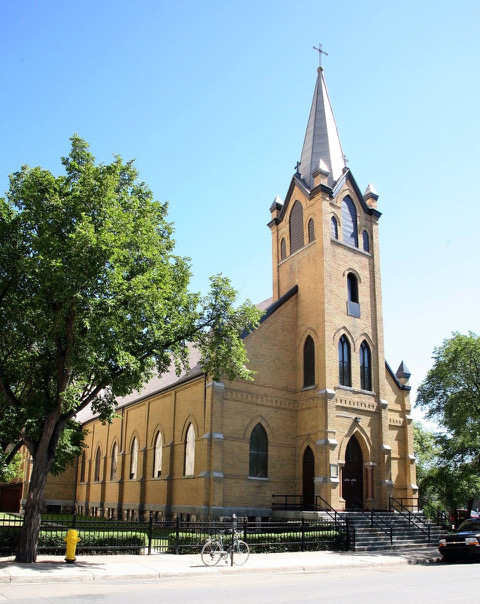
Blessed Sacrament Catholic Church in downtown Regina, has a rich history of being a place of worship and spiritual home for more than 120 years and is a worthy tribute to Regina’s Pioneers.
Blessed Sacrament Catholic Church in downtown Regina, has a rich history of being a place of worship and spiritual home for more than 120 years and is a worthy tribute to Regina’s Pioneers. It is the first and oldest Roman Catholic faith community and church building in Regina, and the city’s second oldest church still in use. Blessed Sacrament was designed by Samuel Hooper in the Gothic Revival style with construction beginning in 1905.
Our giving fund supports the long-term financial sustainability of the Blessed Sacrament Catholic Church. Contributions to this fund will help ensure the continuing work of our parish community for generations to come.
Blessed Sacrament was gifted a pipe organ built in 1994 by Casavant Frères of Quebec, by the Provinciale Presentation De Marie sisters. This fund will assist with the transportation, installation, and modification of the organ.
It is the first and oldest Roman Catholic faith community and church building in Regina, and the city’s second oldest church still in use. Blessed Sacrament was designed by Samuel Hooper in the Gothic Revival style with construction beginning in 1905.
Our giving fund supports the long-term financial sustainability of the Blessed Sacrament Catholic Church. Contributions to this fund will help ensure the continuing work of our parish community for generations to come.
Blessed Sacrament was gifted a pipe organ built in 1994 by Casavant Frères of Quebec, by the Provinciale Presentation De Marie sisters. This fund will assist with the transportation, installation, and modification of the organ.
Blessed Sacrament's History
Blessed Sacrament Church is a worthy tribute to Regina’s Pioneer Catholics. It is the first and oldest Roman Catholic faith community and church building in Regina, and the city’s second oldest church still in use.
The Roman Catholic community of Regina and district constructed its first church on Cornwall Street and 12th Avenue in the latter part of 1883 and named it St. Mary’s Church. It seated 200 people. Fr. L.N. L’Arche was the first pastor and the church was officially dedicated in August 1884 by Archbishop Tache of St. Boniface. The parish became headquarters for many of the Catholic missionaries who served throughout the prairies at that time. In November 1885, following the funeral mass for the executed political figure Louis Riel, he was buried beneath this building’s floorboards by his son, Treffle, before Riel was exhumed for shipment to Saint Boniface, Manitoba.
The Roman Catholic community of Regina and district constructed its first church on Cornwall Street and 12th Avenue in the latter part of 1883 and named it St. Mary’s Church. It seated 200 people. Fr. L.N. L’Arche was the first pastor and the church was officially dedicated in August 1884 by Archbishop Tache of St. Boniface. The parish became headquarters for many of the Catholic missionaries who served throughout the prairies at that time. In November 1885, following the funeral mass for the executed political figure Louis Riel, he was buried beneath this building’s floorboards by his son, Treffle, before Riel was exhumed for shipment to Saint Boniface, Manitoba.
The original church stood for over thirty years. In 1905, the Oblate Fathers began the building of the church on Scarth Street and called it St. Mary’s Church. The current Blessed Sacrament Church was designed by Samuel Hooper in the Gothic Revival style and was built in 1906. The apse of the church was added in 1913. In 1933, the Scarth Street Church was renamed ‘Blessed Sacrament’ (the name St. Mary’s was assigned to St. Joseph’s Hall on Winnipeg Street, where a new St. Mary’s Parish was born). This brick church became Blessed Sacrament Parish in 1934.
Next door, a school was opened in 1908 and closed in 1932. The Saskatchewan Transportation Bus Terminal and Reliance School occupied the building before it was replaced with the Saskatchewan Power Corporation building in 1963. A parish hall was built in 1911 on Hamilton Street and in 1934 was named the Catholic Youth Centre (CYC) hall. This hall was demolished in 1985.
Between 2015-2019, extensive structural repairs to the church foundations and floor, bell tower and roof were undertaken. In 2024-2025, the interior of the Church was repainted because of smoke damage from a fire outside.
A Casavant Frères Pipe Organ for Blessed Sacrament Church
The Opportunity
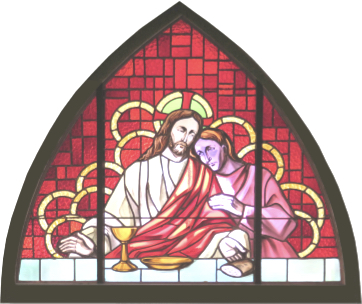
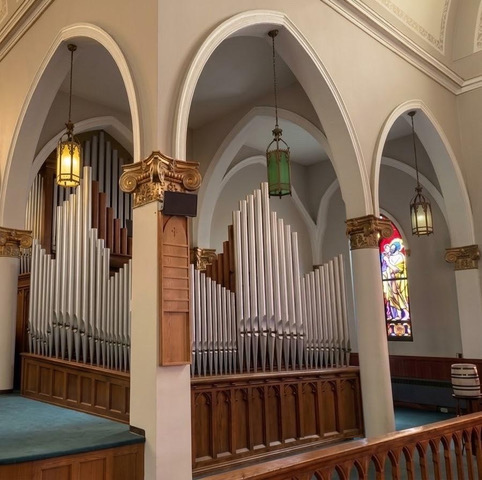
Blessed Sacrament Catholic Church has served downtown Regina for more than 120 years — the city’s first Roman Catholic Church building, and its second-oldest church still in use. Designed by architect Samuel Hooper in the Gothic Revival style, with construction beginning in 1905, the church is known for its bright interior, its stained-glass windows by the Raoult Frères of Normandy, France, and acoustics so generous that choirs and musicians seek it out for concerts.
We have been offered a gift of a pipe organ originally built in 1992 by the renowned Canadian pipe organ builder Casavant Frères of Quebec.
Details of this pipe organ are below.
The Investment — and How to Give
While the organ itself is a gift, at no purchase price, there are cost covering the dismantling and storage in Quebec, transporting it to Regina and installing it in Blessed Sacrament Church. The full storage, transportation and installation cost of one hundred thousand dollar is a small fraction of the six-to-seven-figure cost of a comparable new pipe organ.
We have studied and reviewed the opportunity and we have verified the organ’s condition, the Casavant builder’s letter, the installation and voicing plan, as well as the transport arrangements. We believe acquiring this pipe organ is sound stewardship and a durable enhancement to the parish’s liturgical and musical life, as well as honouring the legacy of the Sisters of the Presentation of Mary ministry in the Archdiocese of Regina. Additionally, this pipe organ carries particular meaning for the parish: it is a Canadian-made pipe organ, from Canada’s most storied organ builder, returning to a Canadian church.
One unique fundraising incentive is the “Sponsor-a-Rank” where people can adopt one of our 26 ranks. Our suggested donation for each rank is $750. More information about this sponsorship effort is found HERE.
With roughly 70% of the CA$100,000 already pledged or raised, the parish is seeking the final gifts and pledges needed to bring this instrument home. Donations are being accepted here through this Saskatchewan Community Foundation’s donor page for Blessed Sacrament Church’s pipe organ fund.
Our Historic Church
Blessed Sacrament Catholic Church has served downtown Regina for more than 120 years — the city’s first Roman Catholic Church building, and its second-oldest church still in use. Designed by architect Samuel Hooper in the Gothic Revival style, with construction beginning in 1905, the church is known for its bright interior, its stained-glass windows by the Raoult Frères of Normandy, France, and acoustics so generous that choirs and musicians seek it out for concerts.
Blessed Sacrament Catholic Church has served downtown Regina for more than 120 years — the city’s first Roman Catholic Church building, and its second-oldest church still in use. Designed by architect Samuel Hooper in the Gothic Revival style, with construction beginning in 1905, the church is known for its bright interior, its stained-glass windows by the Raoult Frères of Normandy, France, and acoustics so generous that choirs and musicians seek it out for concerts.
What the church has never had is a true pipe organ. Worship is currently supported by an electronic instrument built around 2006. A pipe organ offers something electronics cannot: sound produced by moving air through real pipes, with the dynamic range and richness of tone to fill a resonant sanctuary on its own and to lead congregational singing and choirs without amplification.
Blessed Sacrament Parish
2049 Scarth Street • Regina, Saskatchewan • S4P 2H5
Telephone +1 (306) 522-7422
Email: blessed.sacrament@sasktel.net
www.blessedsacramentregina.ca
What the church has never had is a true pipe organ. Worship is currently supported by an electronic instrument built around 2006. A pipe organ offers something electronics cannot: sound produced by moving air through real pipes, with the dynamic range and richness of tone to fill a resonant sanctuary on its own and to lead congregational singing and choirs without amplification.
A Gift from Saint-Hyacinthe
The motherhouse of the Sisters of the Presentation of Mary in Saint-Hyacinthe, Quebec closed recently, and its remaining facilities passed to a nearby school. As the sisters left, they wanted their pipe organ — Casavant Frères Opus 3725, built in 1994 and installed in their Church — to go to a church that would use and love it. When they learned of Blessed Sacrament’s interest, all the way in Saskatchewan, they were overjoyed to offer it as a gift. The organ was dismantled and removed from the convent in October 2025, and is now in storage at Casavant Frères. An inspection has verified it to be in excellent condition after 34 years of careful care.
Simon Couture, Vice-President of Casavant Frères, wrote of the instrument: “It is a beautiful instrument with excellent pipework, and it has been very well cared for in the last 34 years… numerous foundation stops, which are so useful for accompanying hymns… soft and gentle strings and flutes for accompanying cantors and choir… trumpet pipes and mixtures, which provide fire and brilliance to the full organ sound.”
To further enhance this brilliant instrument, it will be further enlarged using donor pipework from other instruments to 28 stops, 26 ranks, and 1,528 pipes, well matched to Blessed Sacrament Church and its generous acoustics.
Regina-based technicians Hart Godden and Victoria Stroeder are leading the project, with guidance from Stephen Miller of Calgary. Hart played the instrument at the Casavant factory and called it “a gem and perfect for the beautiful acoustics of Blessed Sacrament.” The pair bring recent, relevant experience: they were part of the team that installed a Casavant Frères organ in Macau, China in 2025, and have also worked on the Casavant installation at Saint Patrick’s Cathedral in New York City.
Casavant Frères: A Canadian Legacy
Casavant Frères was founded in Saint-Hyacinthe, Quebec in October 1879 by brothers Claver and Samuel Casavant, sons of Joseph Casavant (1807–1874), the first organ builder born in Canada. Before establishing the company, the brothers travelled to France, Italy, Switzerland, Germany, Belgium, and England to study landmark instruments and organ-building techniques. Over nearly 150 years, Casavant has built organs across Quebec, Ontario, Saskatchewan, and Alberta, and around the world in the United States, Zimbabwe, Mexico, Australia, Japan, South Korea, Puerto Rico, and China.
Support the Blessed Sacrament Parish Funds
Blessed Sacrament Parish Giving Fund
Our giving fund supports the long-term financial sustainability of the Blessed Sacrament Catholic Church. Contributions to this fund will help ensure the continuing work of our parish community for generations to come.
Blessed Sacrament Parish Pipe Organ Fund
Blessed Sacrament was gifted a pipe organ built in 1994 by Casavant Frères of Quebec, by the Provinciale Presentation De Marie sisters. This fund will assist with the transportation, installation, and modification of the organ.